

An AI development platform focused on organisational context, model management and private deployment options. The product has become part of Tricentis.
When Team Infrastructure is Important
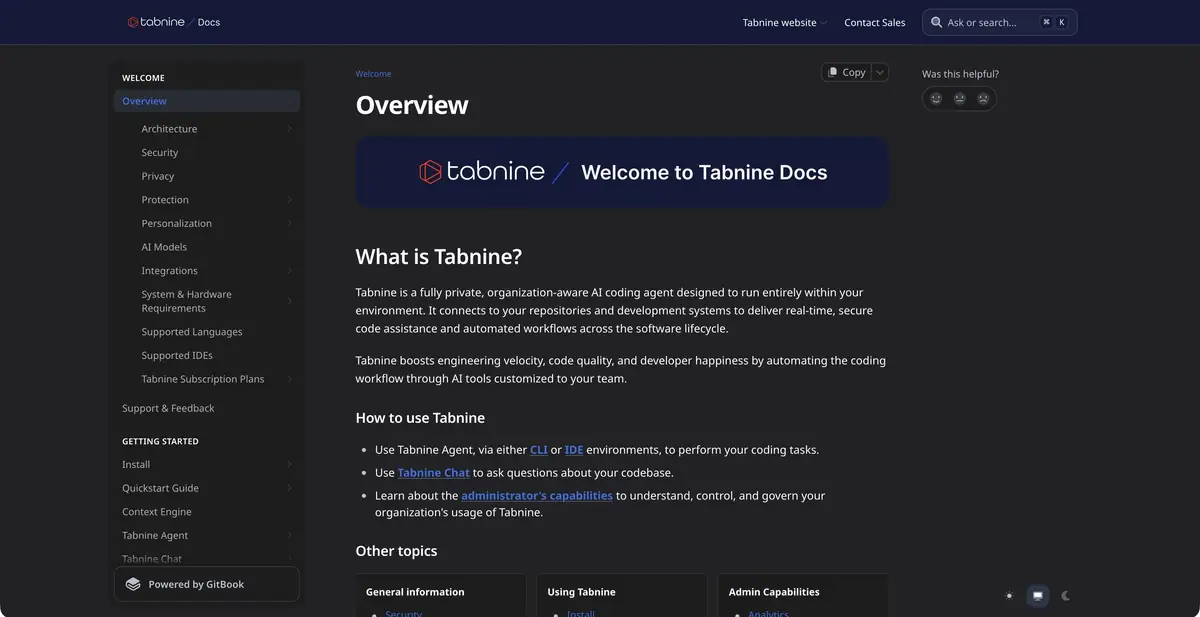
Tabnine targets development within organisations that need to manage access to code, models and tools. Its official description covers the IDE, CLI, repository context and deployment options, including private infrastructure. Tricentis acquired the product; the main homepage may lead into the new product ecosystem, while the Tabnine guide remains separate.
Context and rules instead of an isolated fragment
The assistant uses project information to explain code and propose changes. A team needs architectural consistency, established conventions and permitted dependencies as well as added lines. Before adoption, define accessible repositories and documents, permitted actions and where human involvement is mandatory.
The official documentation covers agents, chat and administrative controls. Supporting several models does not mean each is equally available in every deployment option. Check the particular configuration.
A pilot using a single workflow
Start with a recurring task, such as explaining an unfamiliar module or adding tests to an existing function. Provide examples of the team’s coding style and check whether the assistant follows them consistently. Compare changes with the expected behaviour, not just the number of lines written.
When you connect MCP or internal systems, first limit the scope of reading and actions. The usefulness of the context is quickly lost if outdated instructions or conflicting standards fall into it.
What to check before adoption
Before adoption, find out where the selected configuration sends code, which model processes it and what the logs retain. Compare this with the team’s requirements. Review proposed changes, run tests and make sure you can roll them back: a generated fix can break application logic or add an unsuitable dependency.
License and access
Current plans differ in platform and agent features. Enterprise deployment and model usage may be accounted for separately. Get current terms from the developer; older free-autocomplete articles do not necessarily describe the platform’s entire current offering.
Suitable tasks
- Contextual assistance with code
- Team rules for generation
- Tests and documentation
- Private AI development workflows
Strengths
- Managing organizational context
- IDE and CLI
- Different deployment options
Limitations
- The actual data flow needs to be configured
- Older pricing reviews may be outdated
- Code requires independent verification
Check details
Official sources
This description is based on the developer’s material. Features, prices and availability may change; check the primary source before use.


