

CodeGeeX provides programming models and downloadable CodeGeeX4 weights.
A code model is not a complete agent
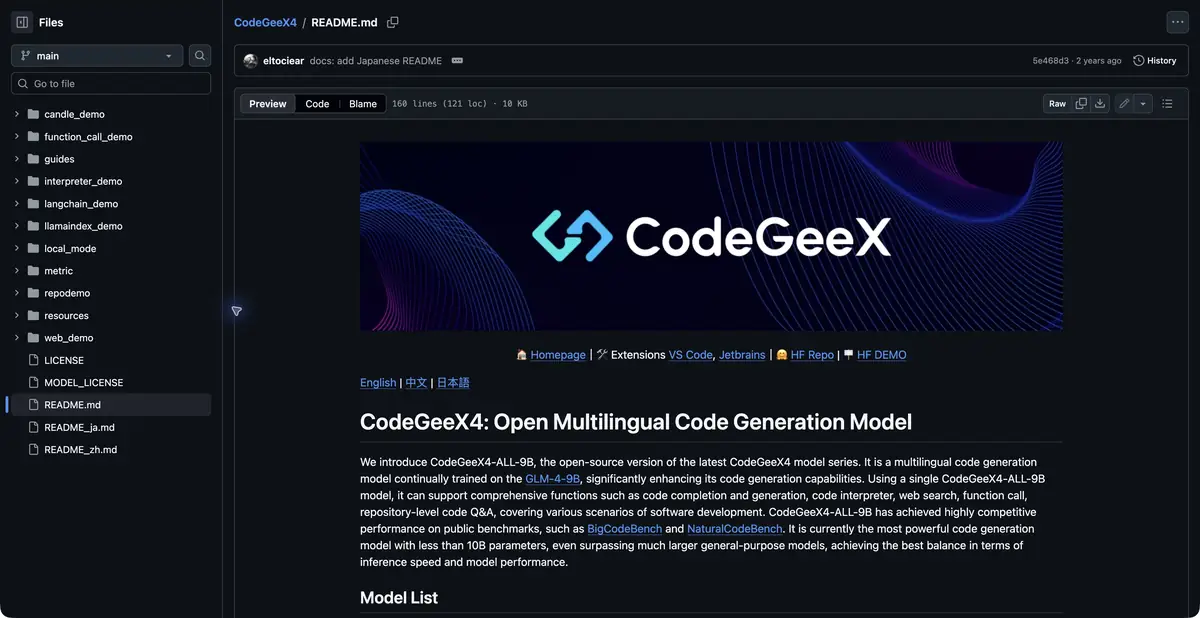
CodeGeeX is a separate family of programming models. The official repository publishes CodeGeeX4 with examples of code completion, project explanation and tool calling. Although built on GLM, its purpose and materials focus on development tasks. Distinguish model capabilities from the features of an editor or connected execution environment.
Suggested code does not run tests or modify a repository by itself. Configured tools perform those actions. If an application gives a model command line or external data access, its developer remains responsible for connection security and permissions. A mode’s marketing name does not replace behavior checks.
What to check with your own function
For a practice task, use a small function from your project that mishandles an empty list. Provide only the necessary code and a reproducible error description. Ask for an explanation first, then a minimal fix. Prepare normal, empty and invalid inputs to check the proposal.
Compare the explanation with actual execution. A model may confidently describe a branch absent from the code or suggest a dependency not installed in the project. Read changes before applying them and run checks in a separate working copy. A first exercise does not require production tokens, the whole repository or publishing permissions.
Weights, inference servers and separate licenses
The official model card describes execution through libraries and compatible inference servers. This is a way to deploy the model yourself, not a promise of a free production cloud API. Check memory, weight format and environment requirements for the selected option and library before installation.
Code and model weights have different terms. Code uses Apache 2.0, while weights have a separate model license; documentation specifies registration for commercial use. Downloadable weights do not imply unconditional permission for any product. Equipment, maintenance and review of generated code remain your responsibility.
Suitable tasks
- Explore code generation and explanation
- Deploy a programming model in your environment
- Check minimal fixes to a function
Strengths
- Published model weights and programming examples
- Documented options for running your own deployment
Limitations
- Model weights have a separate license and commercial terms
- Need resources and verification of each change
Selection and conditions
- Free access
- Not confirmed
- Trial period
- Not confirmed
- No sign-up required
- Not confirmed
- Russian interface
- Not confirmed
- Local installation
- Yes
- API
- Yes
“Not confirmed” means there is not enough information. The feature may still be available; check the developer’s terms.
- Input formats
- Code, Text
- Result
- Code, Text
Terms
Local execution needs a compatible environment. The Apache 2.0 code license does not cover model weights; commercial model use is subject to registration terms.From task to first result
Practical example
- Task
- Explore code generation and explanation
- What to prepare
- A small part of your own project and a reproducible description of the error, with no tokens or passwords.
Task brief or prompt
Explain why this function handles an empty list incorrectly. First describe its current behavior, then suggest a minimal fix and checks for empty, normal and invalid input. Do not change other parts of the project unnecessarily.
Expected result
An explanation of the cause, a small proposed diff and checks to run locally.
How to check the result
- Read the diff before applying it.
- Run the checks in a separate working copy and make sure no secrets were included in the prompt.
An editorial teaching example of a task brief, not the result of hands-on testing of the service. Check that the required mode is available, that you have rights to the source material and that the intended use of the result is permitted.
Check details
Official sources
This description is based on the developer’s material. Features, prices and availability may change; check the primary source before use.